The Eclectica
← the journal

British Colonial Style, Explained

A short guide to British colonial interiors: the dark wood, the white linen, the ceiling fan turning slowly, and how to bring it home without your living room becoming a theme restaurant.

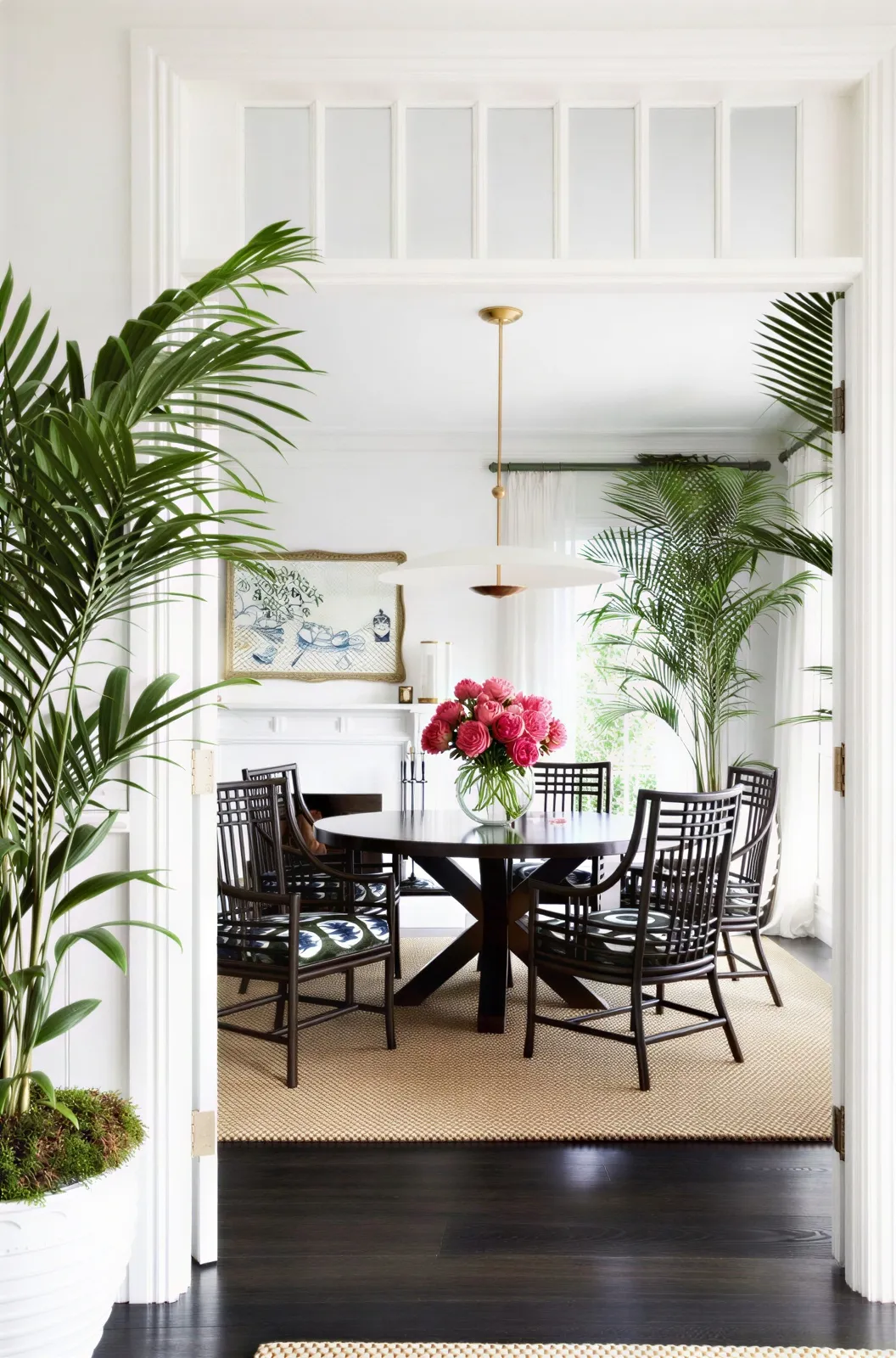
A white dining room seen through a wide doorway: near-black fretwork chairs around a dark round table, a jute rug on dark timber boards, tall palms either side of the opening and a vase of deep pink flowers on the table.
Dark fretwork chairs, white walls, a woven natural rug underfoot and a palm in each corner. I don't think I've ever seen this combination fail. With everything else pared back, a single vase of flowers is all the colour the room needs.Design by Kate Walker Design (Biscayne, Mt Martha)

I should tell you upfront that British colonial style is the product of the British Empire, which is not, historically speaking, a design studio. The style exists because a great many Englishmen sailed off to India, Ceylon and the East Indies, brought their mahogany sideboards with them, and then immediately discovered that neither the furniture nor its owners had been designed for the climate. The furniture that came out of that long, sweaty argument is some of the most beautiful ever made. The history that produced it is considerably less beautiful. Both things are true. Good furniture has never been a reliable guide to good behaviour.

The Great Compromise

What is it, then? Essentially: Georgian formality meets tropical weather and eventually gives in. The English arrived with an entire aesthetic worldview: dark polished timber, upholstered everything, heavy drapery, and a general conviction that a draught should be avoided at all costs. Velvet turned out to be a terrible idea. So did heavy curtains. Eventually, shutters were open, the ceilings were higher, and rooms were being designed for the climate instead of against it.

What emerged was a hybrid, and hybrids in design, as in dogs, are usually where the charm is. English furniture, reimagined by local craftsmen in teak, ebony and rosewood, for houses built for breeze. It’s English formality with its jacket off.
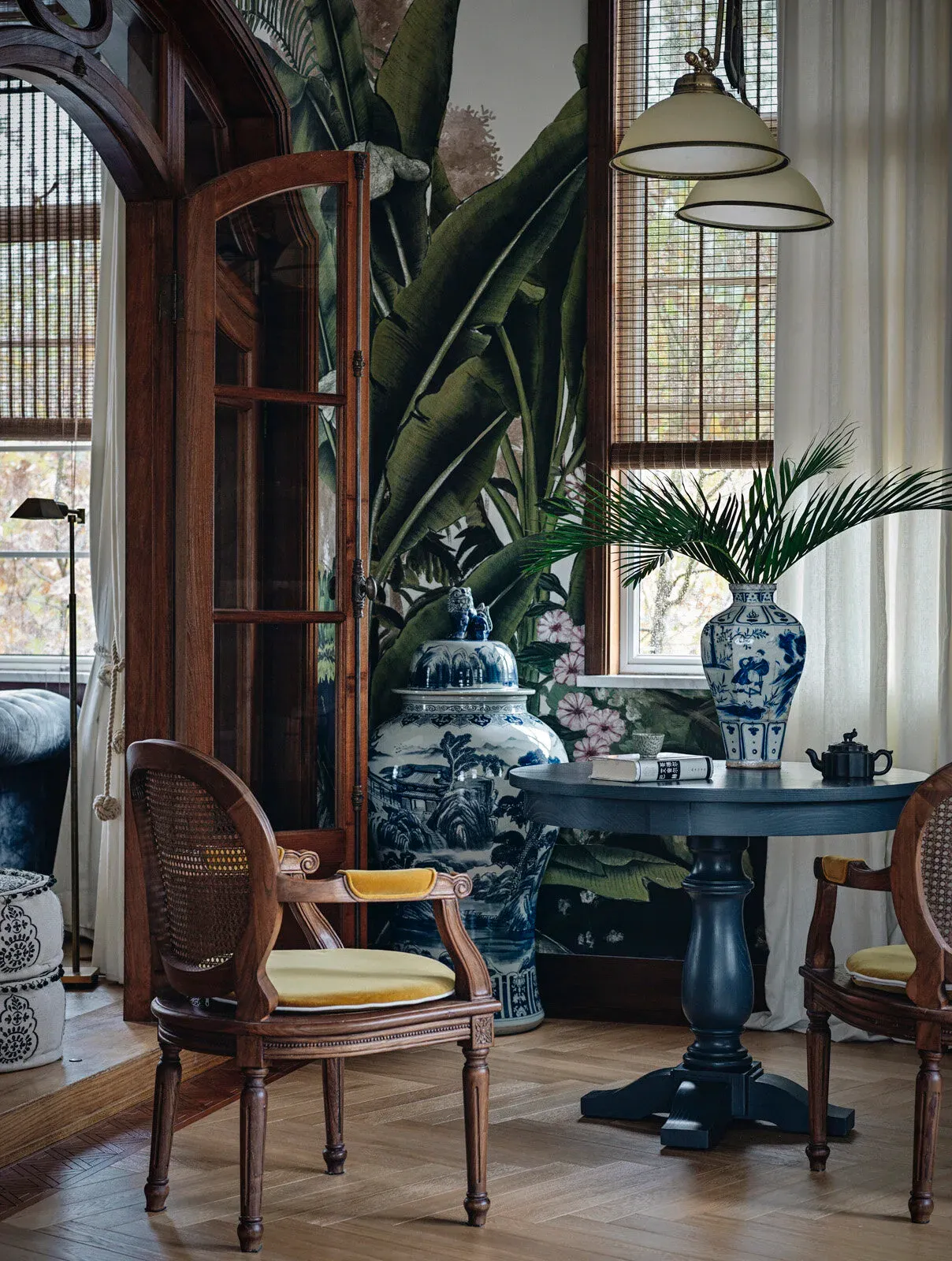
A corner of a Shanghai apartment: two cane-backed armchairs with yellow velvet cushions around a dark blue round table, a large blue-and-white Chinese ginger jar beside them, and a wall mural of banana leaves and blossom behind, with bamboo blinds at the windows.
Cane chairs, Chinese porcelain, a banana-leaf mural and yellow velvet cushions could have been far too much. They aren't. I'd happily sit here for hours over lunch.Design and photography by Baptiste Bohu

What you’re actually looking at

Dark wood against white. This is the heart of the style. Nearly-black timber against white walls and pale, breathing fabrics. The contrast does all the work: it’s why one dark-framed chair in a whitewashed room reads as “colonial” while a whole room of dark furniture reads as “solicitor’s office, 1987.”
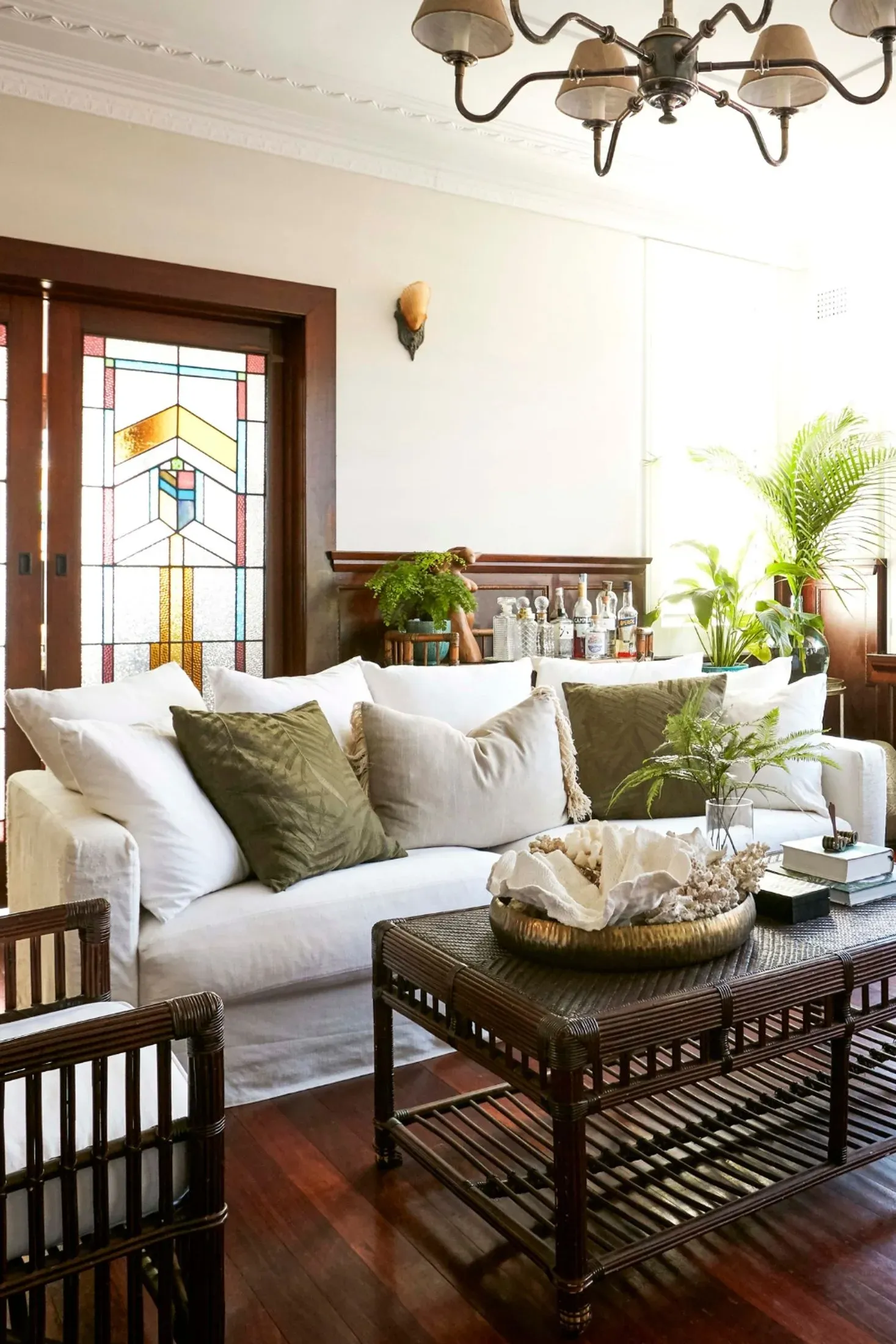
A living room with a white slipcovered sofa, a dark woven rattan coffee table holding coral in a brass tray, and a dark cane armchair, on deep red jarrah floorboards. Dark-stained timber frames an Art Deco leadlight window in amber and turquoise glass behind the sofa.
This is one of my favourite takes on British colonial style because it leaves out all the obvious props. White linen, dark rattan and beautiful jarrah floors are all that's needed. There's no need for trunks or maps when the materials are doing all the talking.Photography by Jacqui Turk, styling by Alanna Smit, for Home Beautiful

Cane, rattan and wicker. Eventually somebody had the sensible idea of letting air through furniture. Woven cane does exactly that. Caned bedheads, cane-panelled wardrobes, rattan verandah chairs. If it creaks gently when you sit down, you’re probably on the right track.
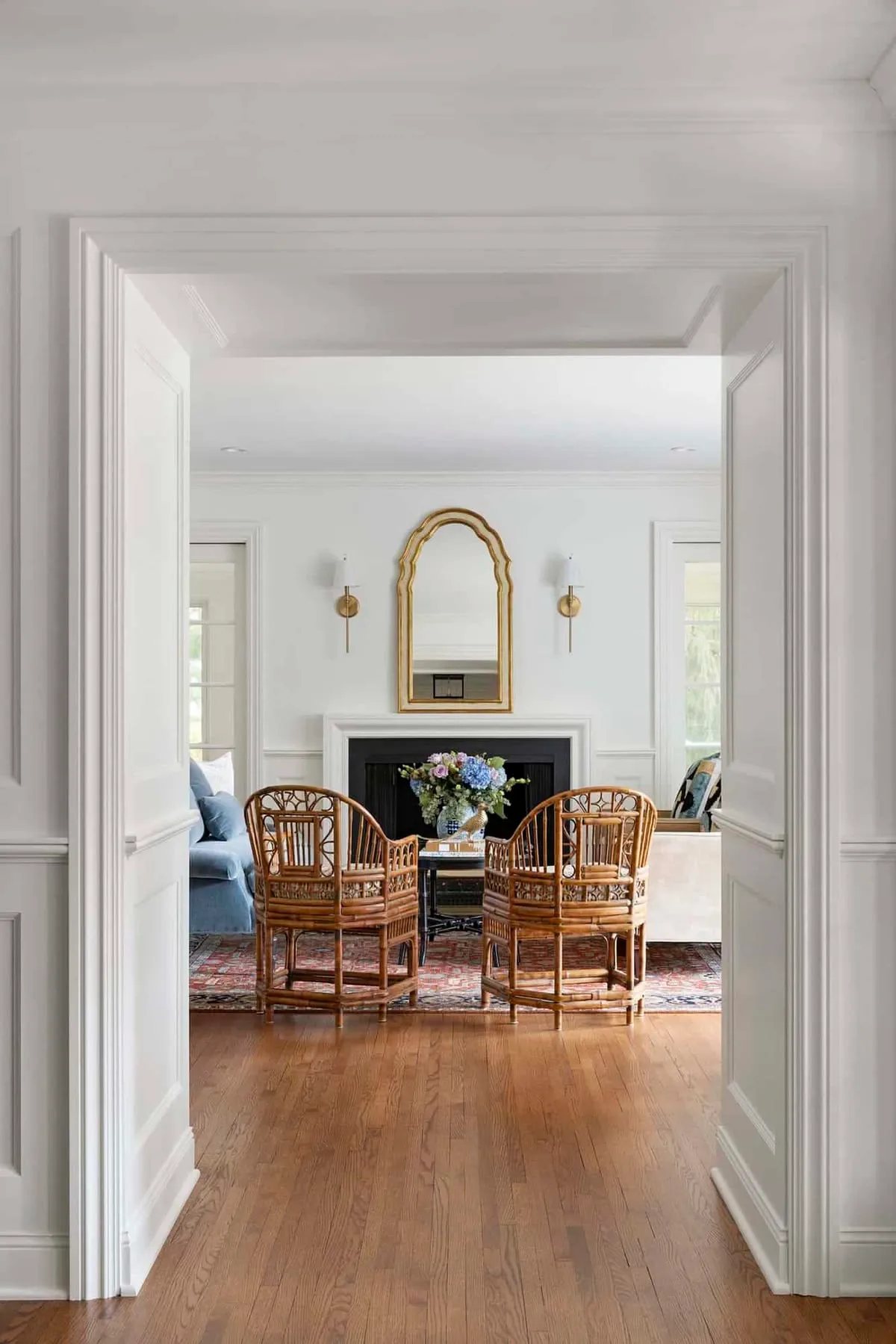
Two Brighton Pavilion cane and rattan tub chairs with rounded backs, seen through a white panelled doorway. Beyond them, a gold arched mirror above a white fireplace, a blue-and-white vase of hydrangeas, and an antique rug on oak floors.
A single pair of cane chairs, framed in a doorway, makes the point without turning the room into a verandah. They know exactly when to stop, which is more than most furniture manages. I would have taken them home on the spot.Design by Martha Dayton Design, photography by Spacecrafting

Louvres, and a fan turning slowly. Timber slats that admit breeze, exclude glare, and stripe the floor with moving light all afternoon. The fan must turn slowly. At full speed it’s an appliance; at its lowest setting it’s an atmosphere.

Botanicals, linen, luggage. Framed botanical engravings, palms, white linen, and a four-poster bed (which survived in the colonies because you needed somewhere to hang the mosquito net, one of the most romantic accidents in the history of sleep). And trunks, everywhere. It’s a style invented by people who were always half-packed.
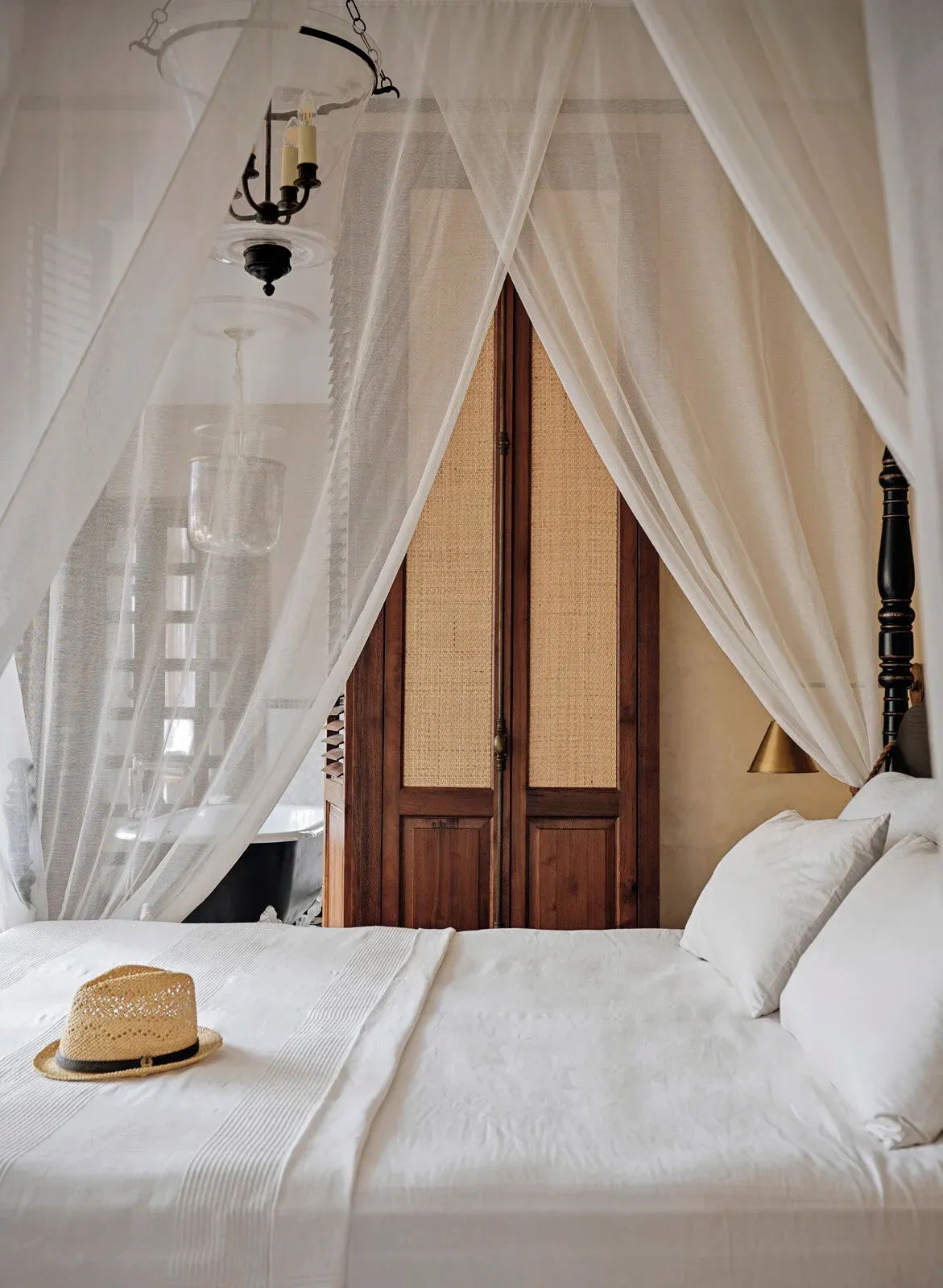
A four-poster bed with dark turned posts, draped in white mosquito netting, made up in white-on-white linen with a straw hat left on the bed. Behind it a pair of cane-panelled timber doors, and a black roll-top bath just visible through the netting to the left.
I used to think four-poster beds were mostly for grand country houses. Then I saw them holding mosquito netting in places like this and they suddenly made perfect sense.Design and photography by Baptiste Bohu

Campaign furniture. Furniture with a personality disorder: desperate to be portable, unwilling to be casual. Desks that folded, beds that dismantled, chests cornered in brass so they could survive being dropped off a ship. The brass wasn’t decoration. It was there because the furniture had a difficult commute.
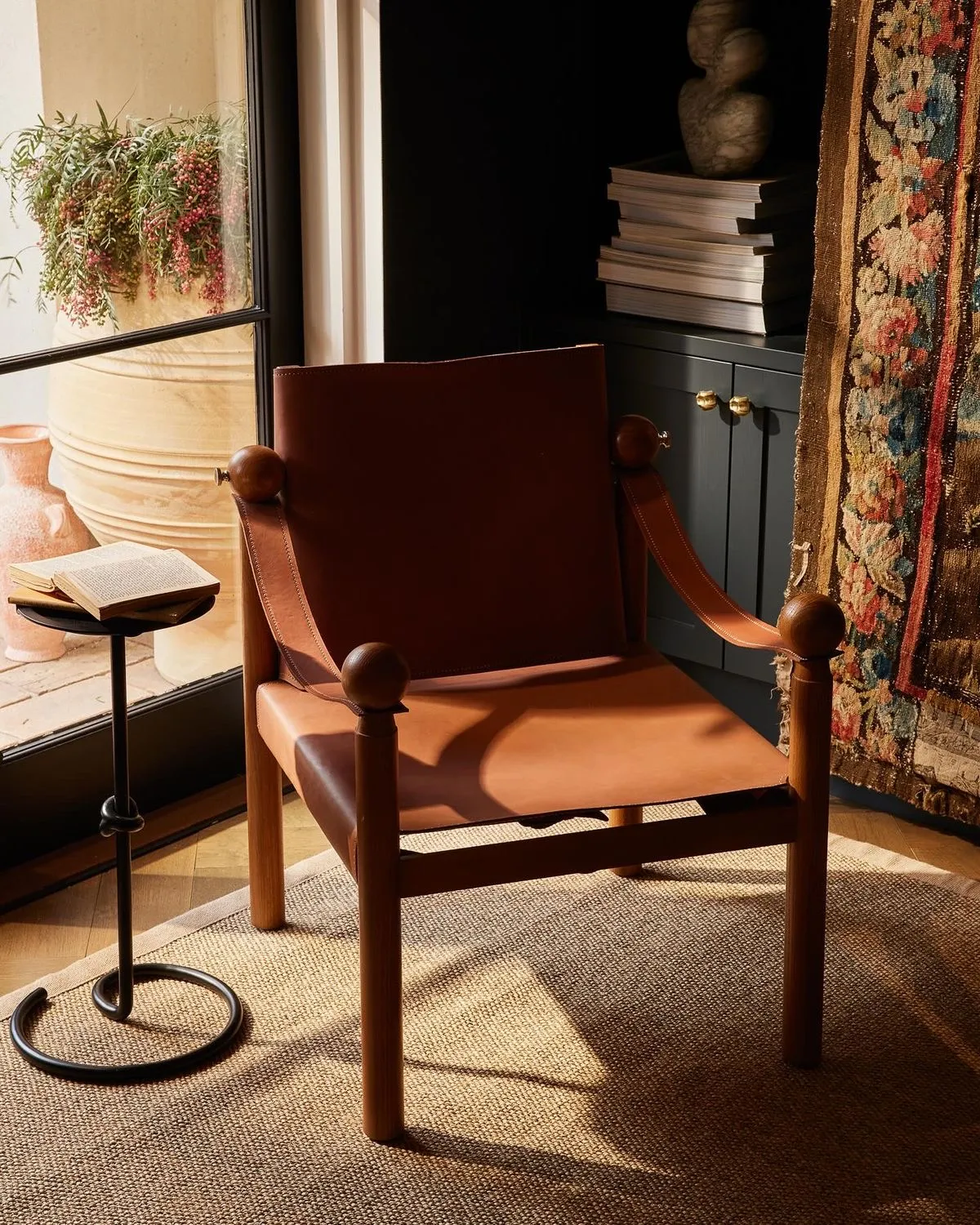
A safari chair in low afternoon sun: a tan leather sling seat and back on a turned timber frame with round ball finials, leather strap arms, standing on a sisal rug. Behind it a dark green cabinet with brass knobs, a stack of books and an antique tapestry.
Campaign furniture was built to fold flat and travel, which is exactly why it looks so at home standing still. This one has clearly stopped moving. I would happily read in it all afternoon.Rachel Donath

How to do it without embarrassing yourself

Every decorating style has a point where it stops looking collected and starts looking themed. British colonial gets there surprisingly quickly. Palm wallpaper. Leather trunks. Botanical prints. Bamboo. No room has ever been improved by looking as though someone might leave at dawn for an expedition.
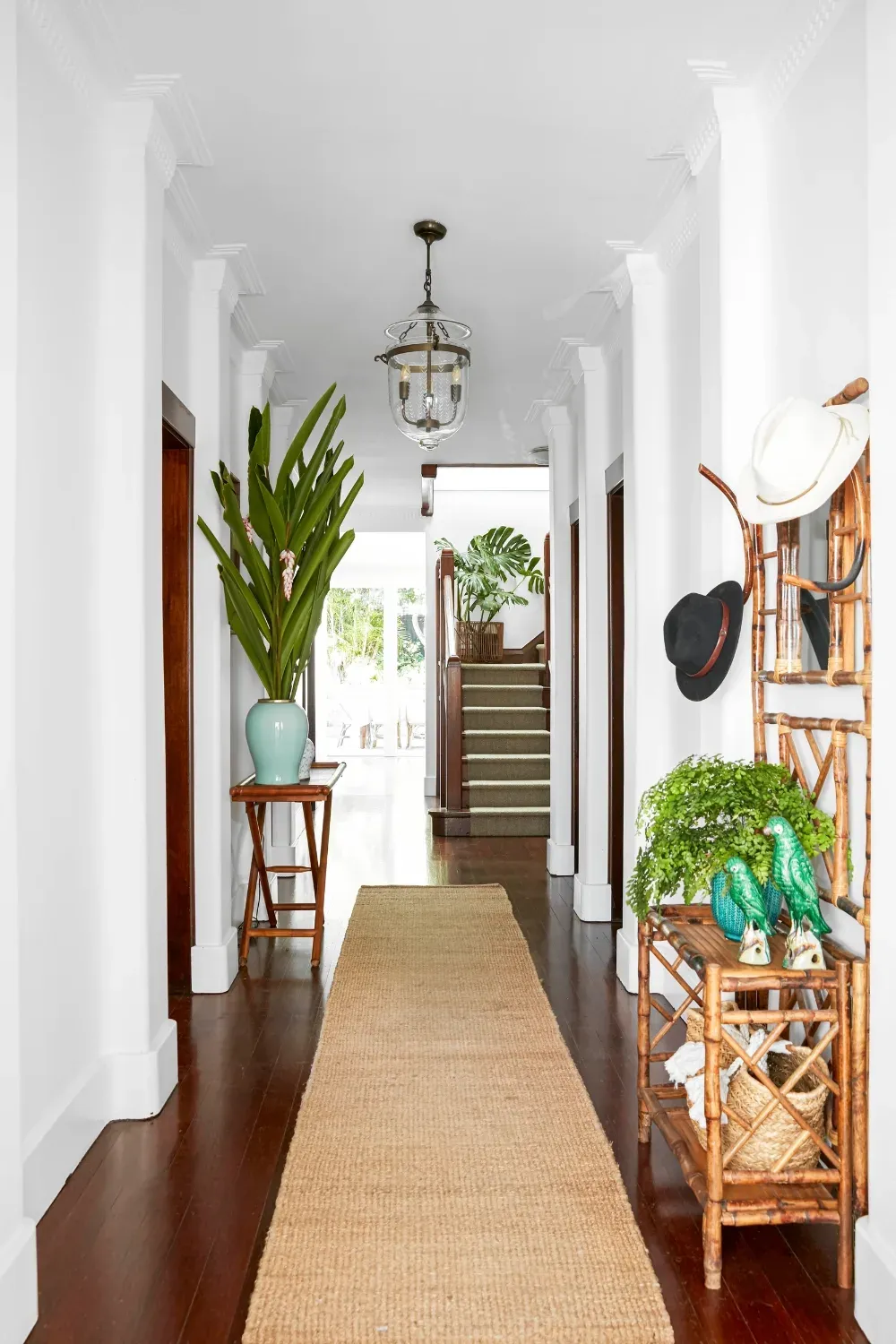
A white hallway with dark polished timber boards and a long jute runner. On the right, a tortoiseshell bamboo hallstand hung with a white panama and a black felt hat, holding a trailing maidenhair fern and two green ceramic parrots. A glass bell-jar lantern hangs overhead.
The bamboo hat stand and ceramic parrots come surprisingly close to being too much. The simple architecture stops the whole thing tipping into novelty.Photography by Jacqui Turk, styling by Alanna Smit, for Home Beautiful
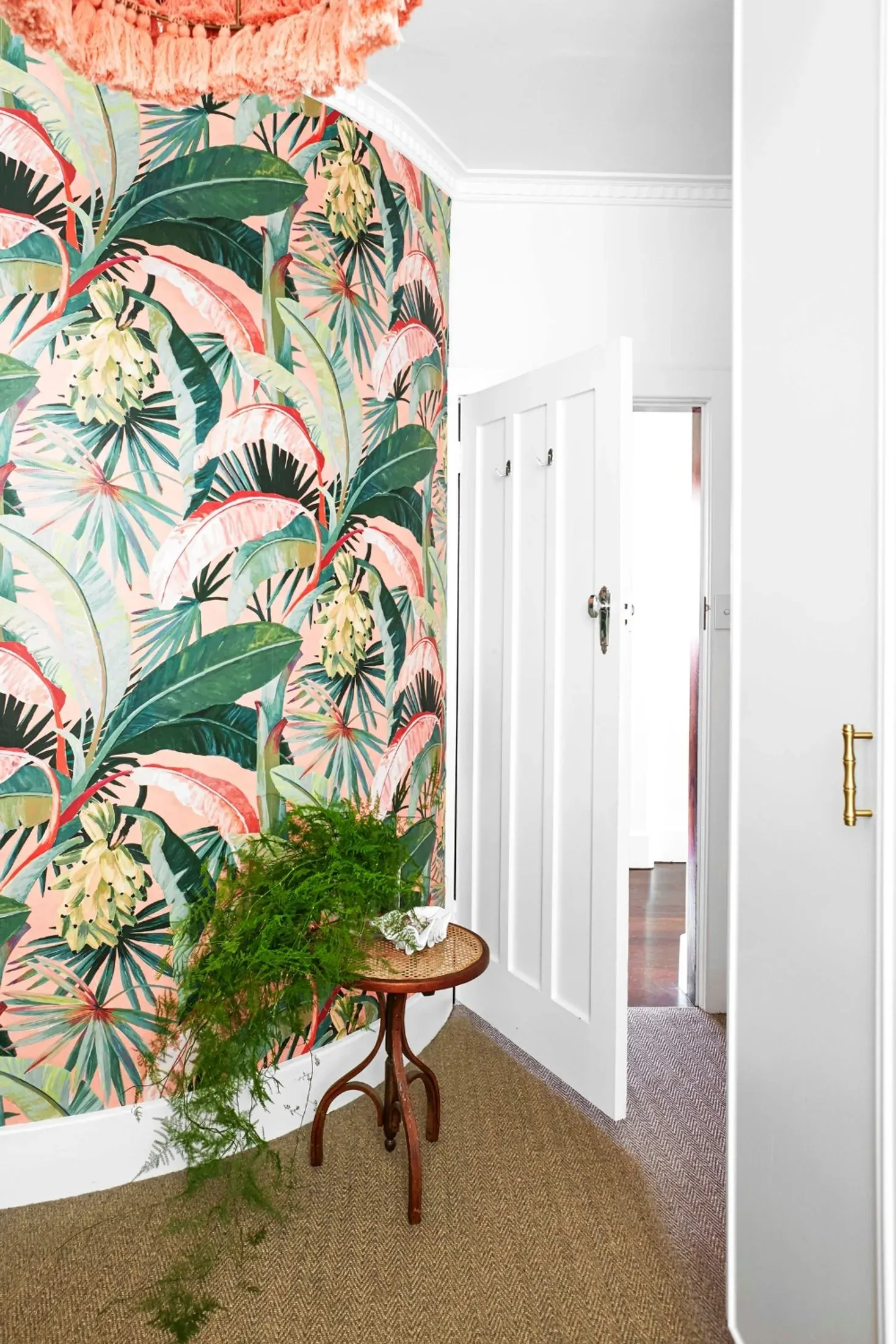
A curved wall papered in a bold tropical print of banana leaves, fan palms and pale flowers on a coral-pink ground, with a coral fringed pendant above. Against it, a small bentwood side table with a caned top holding a shell, an asparagus fern trailing to the sisal floor, and plain white joinery to the right.
I'm usually quite restrained when it comes to wallpaper, but I'd make an exception for this. Cover one wall, leave the rest alone, and it doesn't need anything else.Photography by Jacqui Turk, styling by Alanna Smit, for Home Beautiful

If you’re trying this at home, buy fewer things and buy better ones. One beautiful teak cabinet will always do more than six vaguely tropical accessories. Paint the walls a warm white, choose linen over velvet, cane over upholstery, and make room for light and air. The style has survived for two centuries because it solved a problem, not because it followed a trend.

None of this means pretending the history is prettier than it was. It wasn’t. But good furniture has never been responsible for the politics of the people who sat on it. If you love the style, buy it from the people who still make it beautifully. They deserved more credit then, and they certainly deserve your money now.
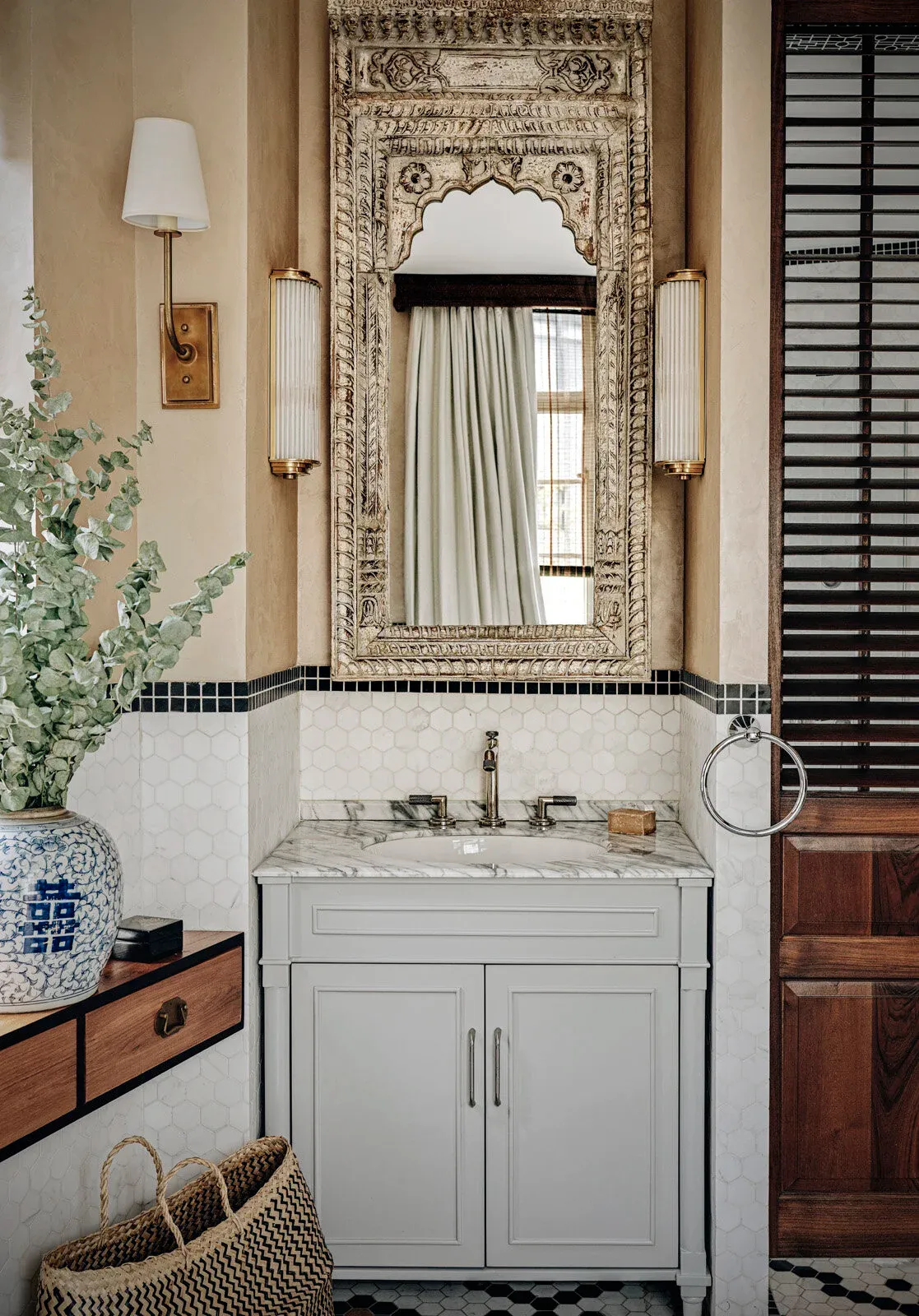
A bathroom vanity beneath a tall distressed hand-carved Indian mirror with a scalloped arch, a fluted glass and brass sconce to either side, blue-and-white porcelain on a wood console, white hexagonal tile with a dark border, and a dark timber louvred door alongside.
I'd have happily planned the whole bathroom around that mirror. You can still see the marks left by the hands that carved it.Design and photography by Baptiste Bohu
fly home